

By Ray Hanania
Today’s younger generation is built on a foundational contempt for us Baby Boomers.
The idea that young people can learn from older people has been discredited through a reliance on social media and technology that creates a false sense of having better and deeper knowledge. They have access to knowledge, but they really can’t process it all themselves. It’s just too much.
Today’s generation thinks they know everything better than we do. They know everything, so what else do they need to learn, especially from the “older” generation?
Technology does all the heavy lifting when it comes to thinking, and it has an impact on their lives, reductions in products and quality, and steep increases in costs. That paradigm has become their lifestyle.
Baby Boomers were the offspring, or product, of a generation that had escaped world annihilation at the hands of mass murderers and nuclear weapons. They learned to covet what they had and to spend more time thinking, reading, and using their minds to solve problems.
My mother rolled up aluminum foil into a ball under the sink and donated it when it got large enough to local government, a habit begun during World War II when aluminum had important value to the nation.
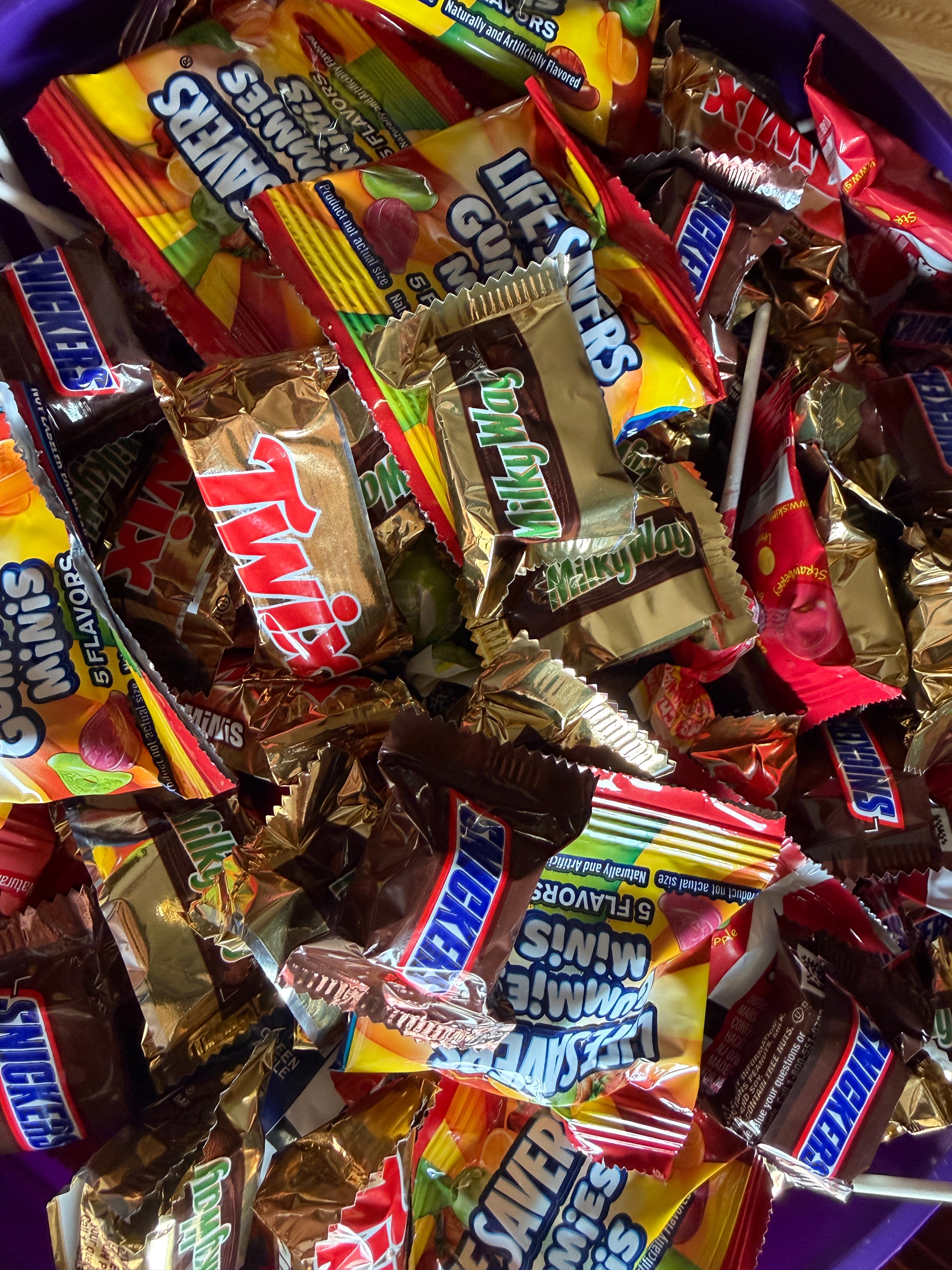
Halloween was a safer experience then, and the candy rewards were exciting. Chocolate bars that were four inches long and thick enhanced the fun for children.
We’d walk the streets until the street lights went on, with our friends while the parents remained. Comfortably at home.
There was crime, but it was not as widespread or threatening. The cost for criminals then was so great and discouraging.
Today, criminals see crime as a challenge and means to improve their lives as the world shrinks around them at astronomical costs. Our society today takes mass murderers for granted. They’ve become factors that define our political beliefs rather than our moral courage.
My generation feared nuclear weapons and technology. Today’s generation thinks they have controlled it, because the only nuclear wars have been experienced through movies and fiction over and over and over again.
I understand why the younger generation has this excessive self-indulgence that feeds a bloated sense of self-esteem.
When I was a kid, contact with the older generation was limited in my sphere to a few dozen adults who we interacted with. Today’s youth have a false sensation of interacting with millions of adults through social media, and that makes it easier for them to come to a conclusion built on a stereotype. We knew the people in our circle. They think they know their tens of thousands of “friends” on social media.
It has created a new kind of “entitlement,” one of the newer additions to the “deadly sins” that plague human achievement.
They don’t need us. We dwell on a past that is far better than their current lives and deteriorating future that they have to confront.
Imagine that when I was young, intelligence was engaged and driven by the human mind. This generation is learning to rely more and more on Artificial Intelligence, while their minds deteriorate.
I used to memorize dozens of telephone numbers. Today’s generation relies on technology to make calls. It’s symbolic of our society today.
When someone contacted my generation, the outreach was far more substantive. Personal and attentive. Today’s outreach is about 85 percent spam and annoyance. And because there is so much of it, concentration is diluted. The ability to focus is crowded out by clutter, much like a hoarder who slowly accumulates junk that suffocates them into stagnation.
Why am I thinking about all this? Well, before social media, we used to talk to more people face-to-face. The discussions were deeper and more meaningful. You thought things out before you said them or wrote them. Even photographing something was the result of thoughtful decisions: you could take 24 or 36 pictures in a roll of films and you didn’t just waste them. You took the best shots, and that gave them true meaning. Meaning has more value.
Today, we take digital pictures because we can. Our photo albums that were once easy to peruse and enjoyably browse are not laborious struggles to sift through thousands of images, including some that are repetitive of nearly the same moment. You might have a burst of 50 digital images of the same moment. How does a mind process 20,000 images? You can’t. The individual enjoyment of each picture has been replaced, bartered off to artificial intelligence, which makes the decisions.
Writing used to be a process of exercising your mind. A slow, deliberate process of deep, intelligent thought resulting in substance.
It has been replaced by a lightning-fast system of expression where thoughts are vomited out of the mind in massive blasts in which nuance and meaning are generalized and stereotyped, and very often wrong.
Accuracy and facts have been replaced with speed and opinion based on one’s personal beliefs, stereotypes, likes, and dislikes. No one gives it a real thought when they react to something on Facebook. They spit it out in rapid-fire emotion, usually in anger.
Praise, likes, and love are gratuitously propelled and are not praise, likes or love at all.
True intelligence is a slow and deliberate personal process of learning and expression, not a rapid marathon through empty words and phrases with no substance, just intended emotion. Happy, sad, mean, or deliberately intended to harm.
The young people don’t realize that their lifestyle decisions are being made by others driven by greed and self-enrichment.
Costs are high because we can’t keep up with the changes anymore. We have gotten used to accepting rising costs as a matter-of-fact lifestyle.
What made me think about all this? Halloween.
When I was a kid, dressing up in costume was a family process. Halloween was knocking on doors. Even though many of us were poor, what we got in candy was real quality.
Large candy bars. Baby Ruths and Butterfingers that took many minutes to consume. And the longer it took to eat, the more we enjoyed it. Oh Henry bars. Chunky Bars. Bit-O-Honeys. They were all substantive. A prize we treasured.
Yes, we got Candy Corns, and small items. But the mix was far more substantive than today.
I was looking through the large bowl of the small and tiny pieces of candy we have been conditioned to buy at today’s stores. The names are big, but the content is small. Snickers Bars that are a ½ inch in length. We have turned large chocolate bars into new iterations of Candy Corn. Throwaways. Conditioned just to get something so that some greedy industry robber barons make huge profits.
Not to mention we don’t do this on our own anymore. We are like bees in a hive, doing things for a greater power we don’t experience. It’s not safe anymore. The expansion and dilution of personal human contact has exposed us to harm, people who have seen and learned ways to hurt through television and the internet.
I pity this younger generation. They will never understand the enjoyment of substantive reward, which has been lost to degenerative efficiency and profits.
And in the end, it will have to be explained to them by Artificial Intelligence, which decides what is important and what is not.
Your article touches on the bittersweet transition that I think every generation: the older viewing the younger with a bit of longing to return back to how things were. But your piece touches on the real realities of the future- AI. Not all progress pushes us forward. Nice piece. I enjoyed it.
Ray, this article really made me stop and think about what's going on around us today versus when we were younger. Thank you for your insight.