

By Ray Hanania
I was fortunate to attend 4 high schools, and it gave me a broad perspective on life that only a few could ever experience, especially an up-close look at racial hatred and its ability to destroy communities and societies.
I attended Bowen High School for my Freshman and most of my Sophomore year; only a few brief months at Bogan High School, and then Little Flower Catholic High School, where I finished my sophomore year in Chicago; and then, completed my Junior and Senior years at Reavis High School in the Southwest suburbs.
Bowen represented the culmination of the many elementary school friends I had growing up in the 1960s, at Warren Elementary School, kids that I got to know really well and with whom I established strong, long-term friendships.
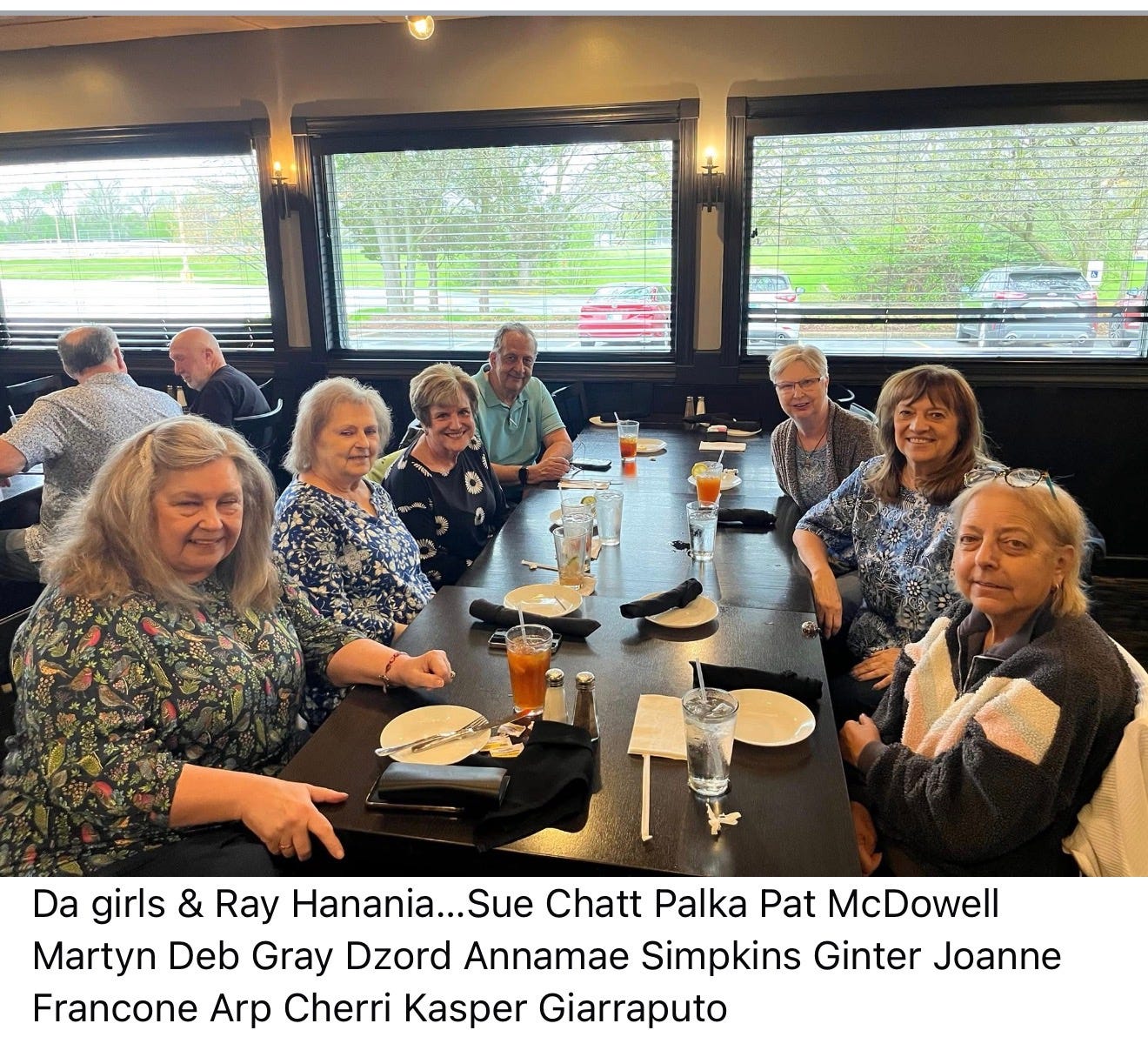
They were my closest friends growing up, ironically, me, a Palestinian Arab, and the majority of my friends Jewish: It was what the Holy Land of Israel and Palestine should have become but never did.
Then like a Middle East war, life was turned upside down by racial hatred between Blacks and Whites in America … White Flight took place in 1969 … it’s hard today to explain how an entire white neighborhood would sell their most important investment and give up their life because some low life realtors came in rattling racisl fears for their own quick profit … in 6 months the area of Pill Hill and Calumet Heights went from all White to 95 percent Black … Jews moved north to Skokie, Niles and far south to Flossmoor, and the small early Arab population and non-Jews moved into the west suburbs
We moved into a home near Bogan High School, but within weeks of enrolling was kicked out with my sister because we were “too dark.” Mr. Avers wanted us to transfer us to Calumet High School, “where you would be more comfortable.”
We were a part of “White Flight.” Didn’t that count for anything? (I wrote an online book about it called “Midnight Flight: One family’s experience of White Flight and the racial transformation of Chicago’s South Side.” Click the link to read.
My mother was from the Holy Christian City of Bethlehem, Palestine, and lived adjacent to and was a parishioner of the Church of the Nativity, where Jesus was born.
Mom convinced the Catholic Archdiocese of Chicago to give us a waiver to allow us to transfer into Little Flower Catholic High School at 79th and Wood Street to finish off my disrupted sophomore year. Back then, you could not go to a Catholic or parochial school to avoid “integration,” although in seeking to send us to Calumet High School, which was 95 percent Black, from Bogan High School, which was 100 percent White, was not integration, but rather, it was really just a form of institutionalized segregation.
My parents sold and then moved again, buying a home in Burbank, where I entered Reavis High School in September 1969, graduating in June 1971.
That ugly experience of racial strife, Chicago’s foundational history, was the catalyst that changed my life, pushing me away from pursuing medicine and becoming a writer, journalist, and a voice for Arab-Jewish moderation and conciliation. Who knew back then that the goal of conciliation would be impossible?
The first week at the new home, a neighbor from across the yard — there were no alleys where we lived at 84th Street between Linder and Long —called me “Punjab,” referring to “The Jungle Books” Indian character, Mowgli, the boy raised by Wolves. I was olive-skinned, but that was dark enough to be Indian. Darker than the neighbors.
I made great friends at Reavis High School. No one there cared about the color of my skin. To them, I may have just looked Italian or dark Celtic, or Irish. And while there, I met a great teacher, Mrs. Harris, who recognized my failing at having flunked every English composition class I had ever taken in elementary and high school. She asked me what I liked to do, and I said I loved playing lead guitar for several garage bands first in Chicago, then Evergreen Park, and later in Burbank. We played at all of the high schools that wouldn’t let me be a student, like Bogan and Evergreen Park High School.
One time while walking to a friend’s house with my gold Les Paul, a Chicago Police Commander ran out of his house as he saw me walk by, grabbed me by the collar and screamed, “I didn’t move out here so you n——s could ruin my neighborhood.” He walked me back to 95th Street and Utica, and held me up on my tiptoes until a bus came by, and he put me back on the bus heading east to the city. The bus driver was sympathetic and let me off a few blocks later so I could get a ride back to Burbank.
When I got home, I told my mother, and she called the Evergreen Park Police and complained, and they basically refused to take a report. The man was a police officer, but with the Chicago Police, living illegally in the suburbs.
Mrs. Harris convinced me to write a column on rock and roll music and on my band performances that Junior year. Suddenly, writing became so easy, and they named me the Editor-in-Chief of the Reavis High School Newspaper, The Blueprint, at the start of my Senior year.
In fact, I loved writing so much now that I published with the help of four other students — all girls by the way — an underground newspaper that used the F word in the headlines and all the stories. We published three editions, mimeographed maybe 100 single two-sided sheet “newspapers” in a garage where they would help write and listen to our band play. The garage belonged to Bridgeview Mayor John Oremus, who allowed us to play our rock music without worrying about the neighbors who complained about the loud music.
Eventually, a Reavis teacher, coach, and school administrator, John Fitzgerald, liked my columns in The Blueprint newspaper. He called me into his office and said, “I know that’s you writing the underground newspaper. Do me a favor and stop it. Focus on the school paper and drop the f-words.”
Fitzgerald, who became Burbank’s first mayor in 1970, was one of those leaders who knew how to avoid conflict and focus on the positive.
A lot of my Bowen and Reavis friends have passed over the years, including my best friend at Reavis, Bill Hennessey.
As I started this column, I am lucky. I got to make a lot of different friends and experience a wide variety in Chicago and suburban schools, and I also get to attend two 55-year High School reunions in September, one for Reavis and one for Bowen. The student talent from both schools is inspirational still, even though many have been lost.
You never know how events — good, bad, or ugly — can take you through life.
I think, though, it is what you make of them.
Wow, interesting story Ray. I never knew that the burbs of Chicago had so much racism. Was there any Arabian or West Asian community groups or Orthodox church elders to protect you and others? What was feeding the racist attitude in Chicagoland? Was there an agenda behind it like "ethnic cleansing" the neighborhoods or was it just plain racist ignorance? I'm shocked to hear how bad it was. I remember my mom telling me Chicago was crazy after MLK was shot.
In college I had ethnicity class that focused on Milwaukee. Extremely segregated city. I know it was very difficult for African Americans to buy homes in allot of areas in the mid 20th century.
Have a great day🫶🏻
I have enjoyed your writing since our Reavis days. You are a talented and gifted scribe.