

By Ray Hanania
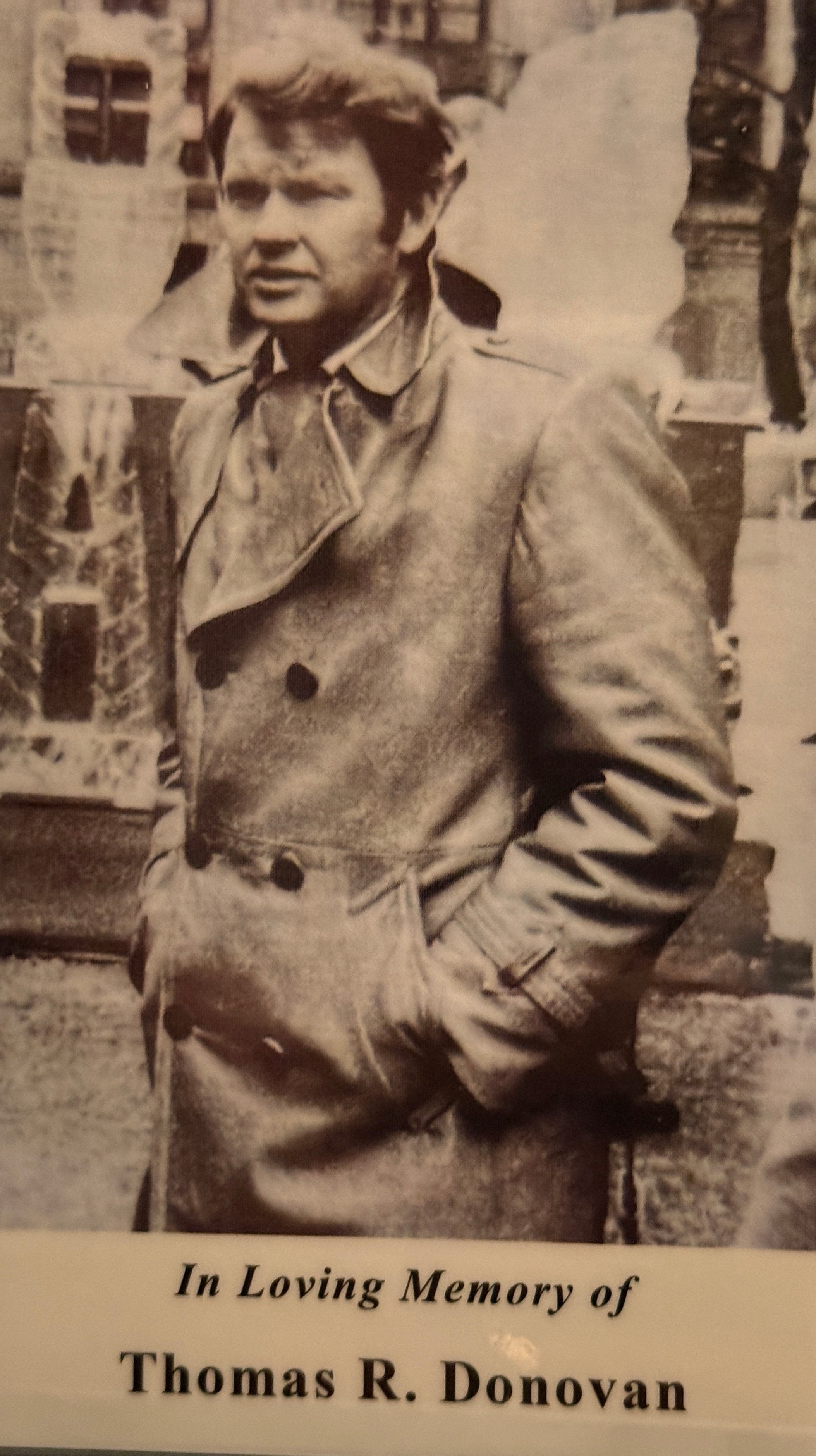
Tom Donovan died last week, another reminder of how politics today is different from before, and how it has changed our lives for the worse.
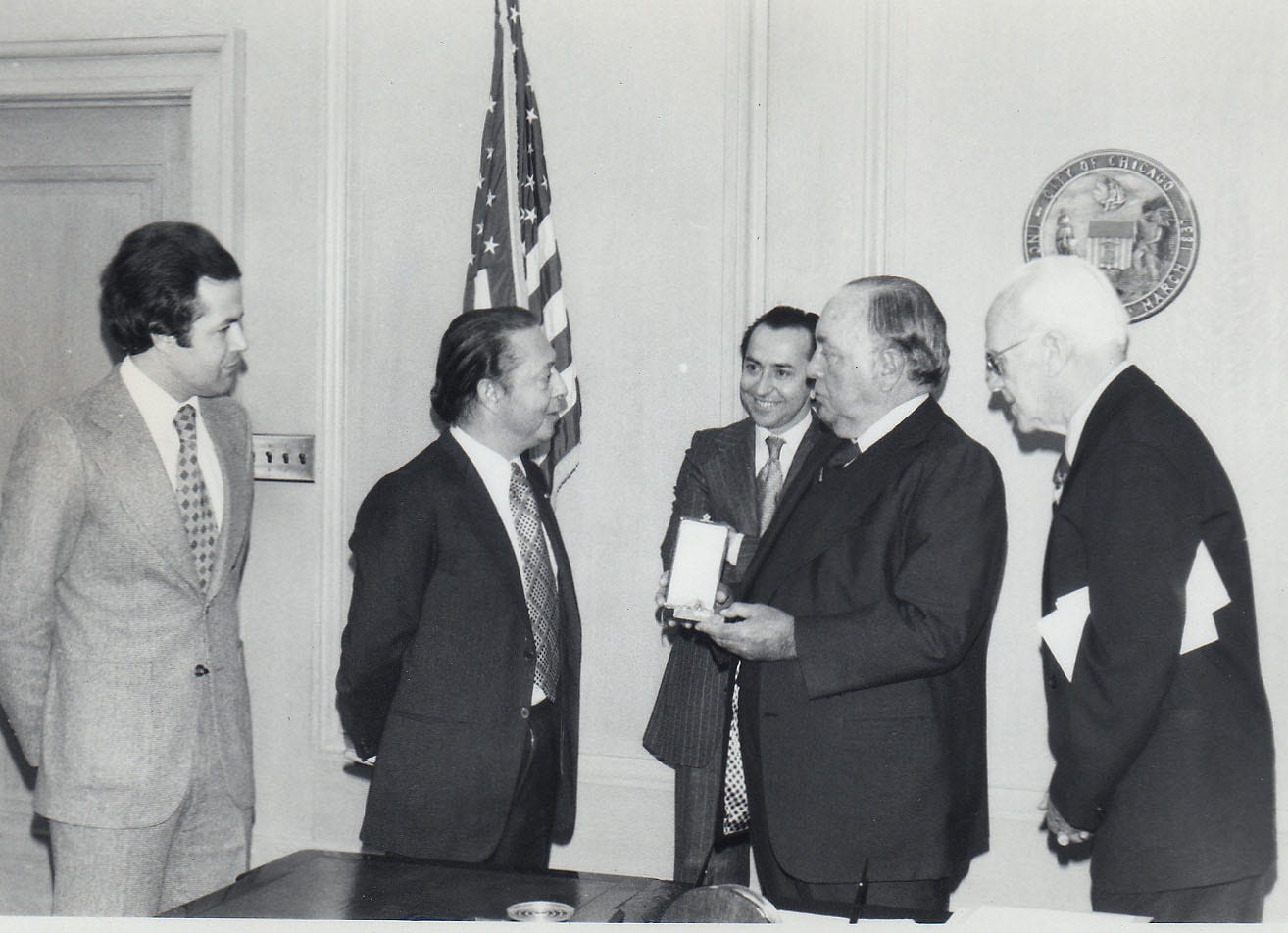
Donovan was a major corpuscle in the lifeblood of the Chicago Democratic Machine that Richard J. Daley built, the political monolith that ran the city and state for more than half a century.
It’s true. When Boss Daley reigned with Donovan at his side, things got done. Chicago residents expected results and they were delivered. Chicago was tough on crime and provided services to the taxpayers. That model projected into the suburbs and the rest of the state, too.
What happened in Chicago impacted the burgeoning suburbs and the health of the state.
Remember “suburban” comes from the adjective “sub-urban” or, below city life. The suburbs were “below” the city, which was held high by the Machine, a smooth-running, high-performance engine that addressed the expectations of the people. It was much like what you expected in new cars built decades ago, vehicles you could count on, and afford, but that you can only dream about today.
Chicago under Daley’s Machine delivered services affordably and reliably. Maybe not always efficiently, but in a manner that satisfied the expectations of taxpayers and provided comfort that things were good.
Yes, there were always things to complain about during the Chicago Machine’s reign, but things got done, unlike today where Chicago mayors stumble through controversy after controversy incapable of providing solutions and disguising ineptitude by throwing higher taxes at the problems, making them worse.
What used to be a major driving force in American society, Chicago is a punchline today for expected disappointment and a cliché that abuses taxpayers more and more every day.
When you compare today’s Chicago and political system with the past, the differences are stark and shocking. We’ve become numb to political failure, accepting Chicago’s failures which have spread rapidly to the state like a disease. Suburban communities caught in between in a vice struggling to survive.
What we lack in Illinois and Chicago -- the foundations that determine whether we suffer or succeed -- is a leader like Daley who had the brains, ingenuity, and fearlessness to do what needed to be done, and a chief-of-staff like Donovan who made it happen.
There’s no courage or creativity to confront today’s challenges in Chicago or Illinois, just a selfish political need for survival.
It’s fueled by an abuse of an electorate battered by excessive taxes, cycles of criminal violence, and a criminal justice system that has shifted from protecting the public to excusing the criminals. There is a stark ambivalence in government about the services the taxpayers have bought and paid for that are taken for granted.
Under the machine, voters who supported or opposed the Machine came out to vote in large numbers, unlike today where confusion consumes the debate and taxpayers turn to the disease of “social media” soap boxes that promote tensions, hatred and confusion.
Donovan lived in an era where the answer to problems was simple: a smart leader who relied on a chief-of-staff who supervised the troops to get things done. Most of the time what was done was beneficial and fair, although sometimes it wasn’t.
That’s what I call the “Ronald Reagan principle,” something he said as that defines commonsense reality. There is no such thing as 100 percent. Reagan famously said, “The person who agrees with you 80 percent of the time is a friend and an ally – not a 20 percent traitor.”
That fundamental truth dove tails with another principle, one that can be extrapolated from Einstein’s Theory of Relativity from science to life: politics is relative, and comparative. The hero today can be the villain tomorrow, when leadership changes.
Joe Biden wasn’t the best president. He made so many mistakes. But he certainly was a better president than Donald Trump, today. Neither were better than Barack Obama, Reagan or Dwight D. Eisenhower.
It’s all relative. There are policies about each that we liked and that worked, and some policies that we didn’t like and that didn’t work. If the balance was 80-20, as Reagan explained, that was good enough.
I live by that principle.
Yes, there were issues with the Chicago Machine, and they made big headlines at a time when the news media was robust and provided truth through “competitive honesty.”
With five daily newspapers, reporting had to be precise, honest and fair. In today’s world where media is owned and controlled by five major corporations, reporting is not even a shadow of itself. It’s unreliable, burdened by economic starvation, and battered down by the hysteria of social media and “artificial intelligence” (an oxymoron if there ever was one).
The news media today is not even a shadow of what it was when the Chicago Machine reigned.
Machine lieutenant Jane M. Byrne, Daley’s commissioner of Consumer Sales, Weights and Measures, broke with the Machine in 1978 after Daley’s death after being persecuted by the “Cable of Evil Men.” That provoked Byrne to run for Mayor and defeat the Machine. She used what she described as the “new media” that replaced the poower of the print newspapers. By 1979, when she won the Democratic Party nomination, the number of newspapers in Chicago dropped from five dailies to only two. The real power shifted from print to television.
The news business went from “readers” and “subscribers” in the era dominated by print newspapers during the height of the Machine, to “followers” in today’s era of social media which has taken over the reporting narrative for many int he public.
In between, during the Byrne election era, was a brief period in between when television and radio, the electronic media, dominated coverage. Jane Byrne called TV news “the new precinct captains.”
After Byrne abandoned her “reform campaign” and re-established a new Machine that she controlled, the Machine survived until it collapse during her failed re-election losing to a former Machine lieutenant turned progressive champion, Harold Washington.
But even in the wake of the Machine, Social Machine started its takeover.
Today, in the shadow of AI and social media, we really don’t know where truth ends and lies and exaggerations begin. Not only must you be wary of the advertising dishonesty being promoted on social media platforms like Facebook and others, but you can’t trust the “reporting” from everyday citizens who have no journalism experience but who will believe almost anything that aligns with their personal preferences in society, politics, and almost every industry. Social media platforms are easily manipulated by the big corporations. (I use it mainly as aplatform to promote my writings.)
The Chicago Machine was frequently criticized by media columnists during the Daley era, and is still slammed in analysis by today’s writers, as if there isn’t an equally sinister movement trying to control our minds through the corruption of social media.
But the Chicago Machine delivered the services it promised, the protection that was required, and was made up of the people who lived in the city’s wards. That’s not something we can say today about politics.
Our presidents have been erratic and engaged in spin to disguise their failures and exaggerate the faults of their foes. Illinois, for exmaple, is not run by governor’s with idealism in public service but by their money and selfish political greed. Illinois is one of the worst states in the nation when it comes to many measures including taxation and services.
That change has put the past in a clear perspective.
People like Tom Donovan were responsible for keeping the Chicago Machine on an even keel, and the public sane, and confident that the challenges Chicagoans faced would be overcome, unlike today.
Read my extension profile that I wrote on Tom Donovan at CourageousThought.com by clicking this link.
What was it that Pappy Daley said? First ya looks aftah da peepoles. Then you fills your pockets. Not the other way around.no, he never said the second part out loud. He did say, Da police aint here to create disorder, da police is here to preserve disorder.