

By Ray Hanania
Attorneys for former Illinois House Speaker Michael J. Madigan petitioned the U.S. Supreme Court (July 27, 2026) to review and overturn his conviction for allegedly using his political powers to benefit allies and himself on allegations of bribery, fraud, and related schemes.
Madigan, 84, was charged in March 2022 with using his political clout to arrange political jobs, consulting contracts and public board appointments for allies in other administrations and governments — practices that are common in Cook County and Illinois that are taken for granted for almost everyone else.
The case was based on RICO, the Racketeer Influenced and Corrupt Organizations Act, which is designed to make it easier for prosecutors to dismantle alleged criminal organizations, usually street gangs — not by lowering the legal burden of proof, which remains “beyond a reasonable doubt” in criminal cases, but by reducing the level of a crime making it easier for prosecutors to blur a defendant in a broader definition of a “corrupt organization.
RICO helps prosecutors connect the street gang bosses to the gunmen who they order to commit murder and other horrific crimes.
In politics, RICO is a unique strategy that allows the prosecutors to sidestep the need to present evidence of an actual crime in oirder to convict someone who has clout and a negative political image.
In other words, you don’t have to prove or show that a politician took one penny in bribes, only that he rewarded political loyalty in the pursuit of his public goals, issues and principles. There isn’t one piece of evidence showing Madigan took a penny.
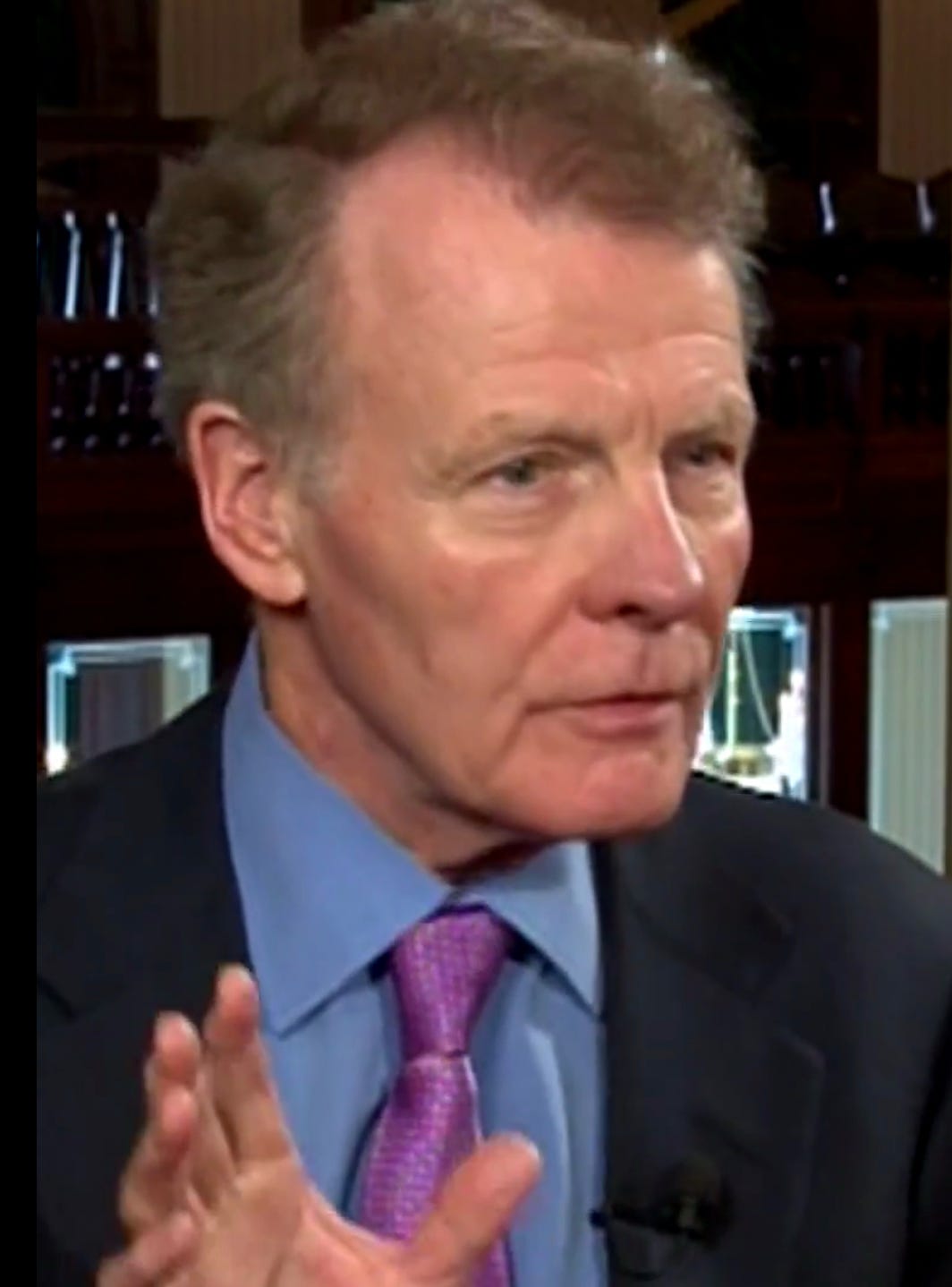
The RICO charge was the foundation of the Federal case against Madigan, allowing Federal Prosecutors to imply corruption even though Madigan never received any direct financial benefit and only acted in a political capacity to reward his supporters the way Chicago, Cook County and Illinois allow every politician from Congress, the legislature and the Governor on down to reward their loyal supporters.
Ironically, the very foundation of the case against Madigan, that it was a RICO crime, was rejected by the jury, yet they approved 10 RICO related allegations (without Rico being the approved founation), and thre our 12 other charges.
The jury in February 2025 also acquitted Madigan or could not reach a verdict on 12 other charges. But, they surprisingly found him guilty of 10 charges that relied on the Federal Government’s RICO case even though the RICO foundation was rejected.
Thousands of politicians in Illinois award contracts, jobs and favors to loyalists who support their agenda, but are never charged because the practice is so commonplace in government.
The Federal Government hoped that by using RICO they could prove this was a criminal enterprise. But they failed because under the RICO law every Chicago politician from Alderman to Mayor to legislator to Congressman could be found guilty of a crime simply for rewarding their loyal supporters.
It’s a funny thing about Chicago politics, if you are a popular politician, everyone closes their eyes to your political practices. But if you are unpopular, they dislike you and want to unseat you so they can take your power and position.
Madigan served in the Illinois Legislature for 50 years from 1971 until 2021. As the most powerful politician in Illinois’ history, Madigan made far more political enemies than most others, including being attacked often by the mainstream Chicago news media.
And that’s why in February 2025, the jury found Madigan guilty of “RICO” conduct. On June 13, 2025, U.S. District Judge John Robert Blakey sentenced Madigan to an astonishing 7 and one-half years in Federal prison. Worse, though is the judge rejected a request to serve the sentence in a prison close to Illinois to allow Madigan to be close to his wife, Shirley, who dedicated her life to public service and continues to suffer from many serious illnesses.
During the lengthy Federal proceedings, Mrs. Madigan was unable to attend many of the court dates because of poor health, offering her video statement to the court in seeking leniency for her husband.
In an act of pure political cruelty, Madigan was sent to a Federal Prison 536 miles away, 9 hours drive from Chicago to the Morgantown facility in West Virginia.
Madigan’s attorneys appealed the absurd and abusive ruling but the same judge affirmed the conviction.
An appearance before the U.S. Supreme Court is intended to get the case out of the atmosphere of corruption that plagues Chicago and Illinois. It is before the U.S. Supreme Court in what is called a “Writ of Certiorari,” primarily a legal request for appeal that asks the U.S. Supreme Court to review the lower court’s decision.
Here are some of the major points the Madigan Legal team argues in the appeal to the US Supreme Court:
“The decision below cements a longstanding circuit split over the definition of “corruptly” in the oft-prosecuted federal-program bribery statute, 18 U.S.C. § 666(a)(1)(B). That statute makes it a crime for state and local officials to “corruptly solicit[,] demand[,] … or accept[] … anything of value” “intending to be influenced or rewarded in connection with” government business.
“This case is the ideal vehicle to resolve these splits and clarify federal bribery law. The government prosecuted Speaker Madigan under § 666 for engaging in an alleged bribery conspiracy with the utility company ComEd. Un-like virtually every other bribery case the federal government has prosecuted, neither Speaker Madigan nor any of his family members received even a cent from ComEd. Instead, ComEd hired political associates of Speaker Madigan.
“Corporations routinely hire politically connected individuals and lobbyists, sometimes acting on recommendations of public officials. And, of course, legislators routinely act on legislation of interest to corporations. That is why § 666 requires the government to prove that an official “corruptly” agreed to a quid pro quo—i.e., that the official understood that his actions were wrong or unlawful. But the jury here was told that Speaker Madigan could be found to have acted corruptly if he understood ComEd’s intent to influence him.
“The government did not tie specific hirings to promised official action on specific legislation. Instead, the government prosecuted the case on the nebulous theory that ComEd offered a “stream of benefits” to Speaker Madigan’s associates so that Madigan would act favorably on legislation of interest to ComEd when such legislation (whatever its topic) arose.”
Madigan’s appeal includes major documents from the case for review by the U.S. Supreme Court justices.
The sentence of 7 and one-half years in prison imposed on Madigan is ridiculous and driven by a wide range of political stereotypes and biases. It is a more of a political sentence than it is a legal one.
A man who beats his wife and causes great bodily harm of aggravated domestic battery, a Class 2 felony, only faces a sentence in Cook County of between 3 to 7 years, usually under 4.
I was first introduced to Mike Madigan in 1978 by Chicago Mayor Michael A. Bilandic during a Democratic Party fundraiser at the Conrad Hilton Hotel.
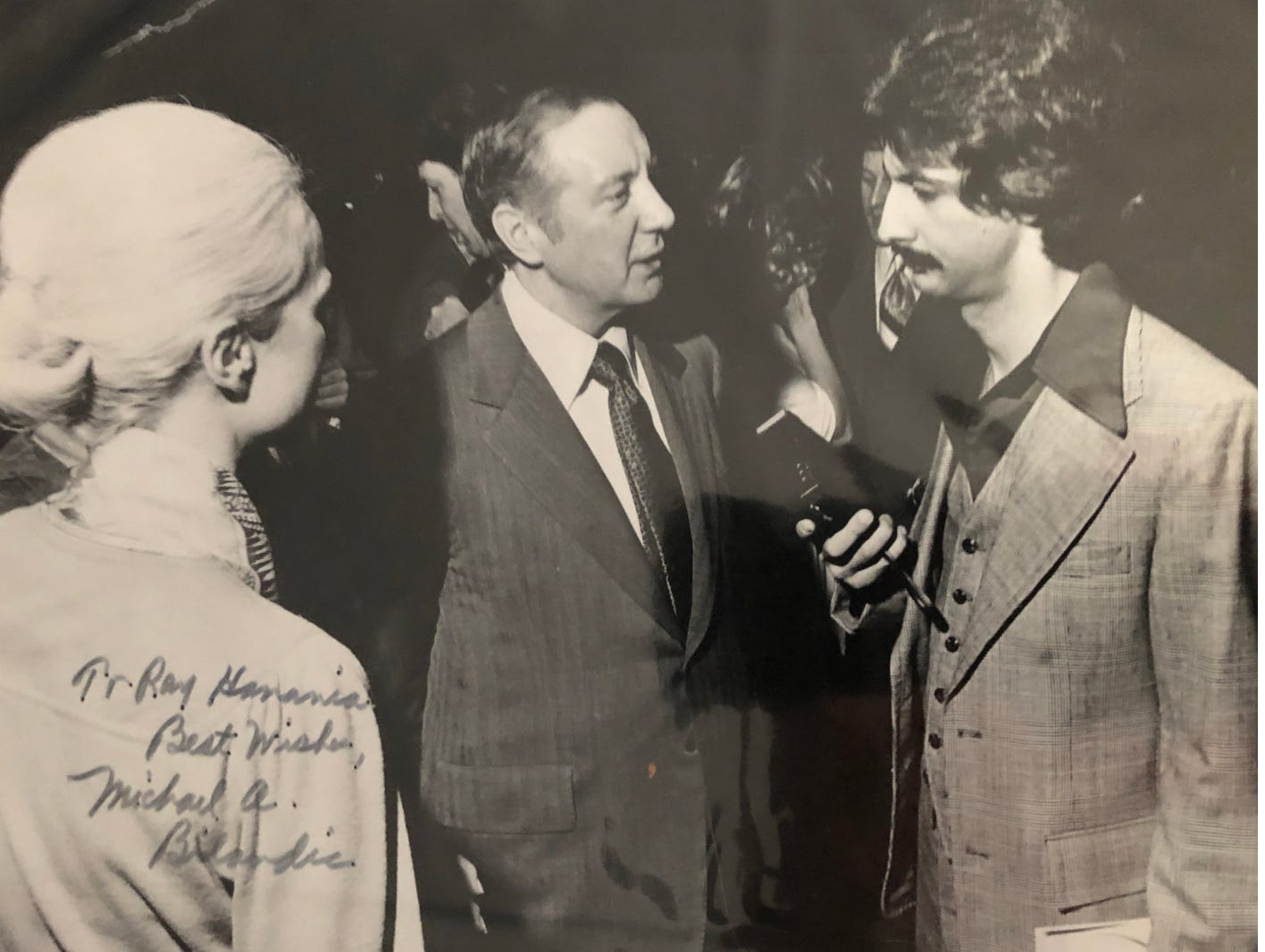
I have criticized him, praised him, supported his decisions and opposed his decisions. But in all those years of power, Madigan was always a professional and ran the legislature better than any other predecessor or successor.
Madigan deserves the benefit of the doubt but he also deserves to be judged fairly, the same way we judge everyone else.
Clearly, Madigan is being held to a more rigid standard of the law, one that is unfair and denies him the rights that so many other politicians are routinely granted.
Your articles are always thoughtful. I appreciate the depth of detail in this article. Even your opinions are backed up by reference to the laws. Thank you, Ray.