

By Ray Hanania
FREE/Sports, Canelo-Crawford boxing, Saudi Arabia/Thursday, Sept. 11, 2025
This week, Saul “Canelo” Alvarez faces off with challenger Terence Crawford in the Super Middleweight division boxing match in Las Vegas on Sept. 13, sponsored by Saudi Sports official Turki Alalshikh of the General Entertainment Authority (GEA).
The support that American boxing is receiving from Saudi Arabia is re-energizing the popularity of professional boxing and dates back to the 1960s when the Arab World rallied behind the rise of rising boxing star Muhammad Ali.
Ali, who changed his name from Cassius Clay in March 1964, lived near me on Chicago’s Southeast Side, a region of the city racially segregated between Whites and Blacks.
But Ali would often come to the major grocery franchise, Jewel, located in a “free zone” at 87th and Stoney Island Avenue, where Blacks and Whites would often shop and come together to dine.
The Southeast Side also happened to be the home of a burgeoning Arab and Muslim community that would in a half-century grow from 25 families to more than 450,000 people in the Northern Illinois region.
In the late 1960s, Ali often came to the Jewel in his flashy Lincoln Continental limousine, accompanied by a Palestinian American body guard, Salameh Hassan, who had a huge athletic build. I worked there at age of 16 as a “food bagger,” putting groceries in paper bags for customers and sometimes carrying them out to their cars.
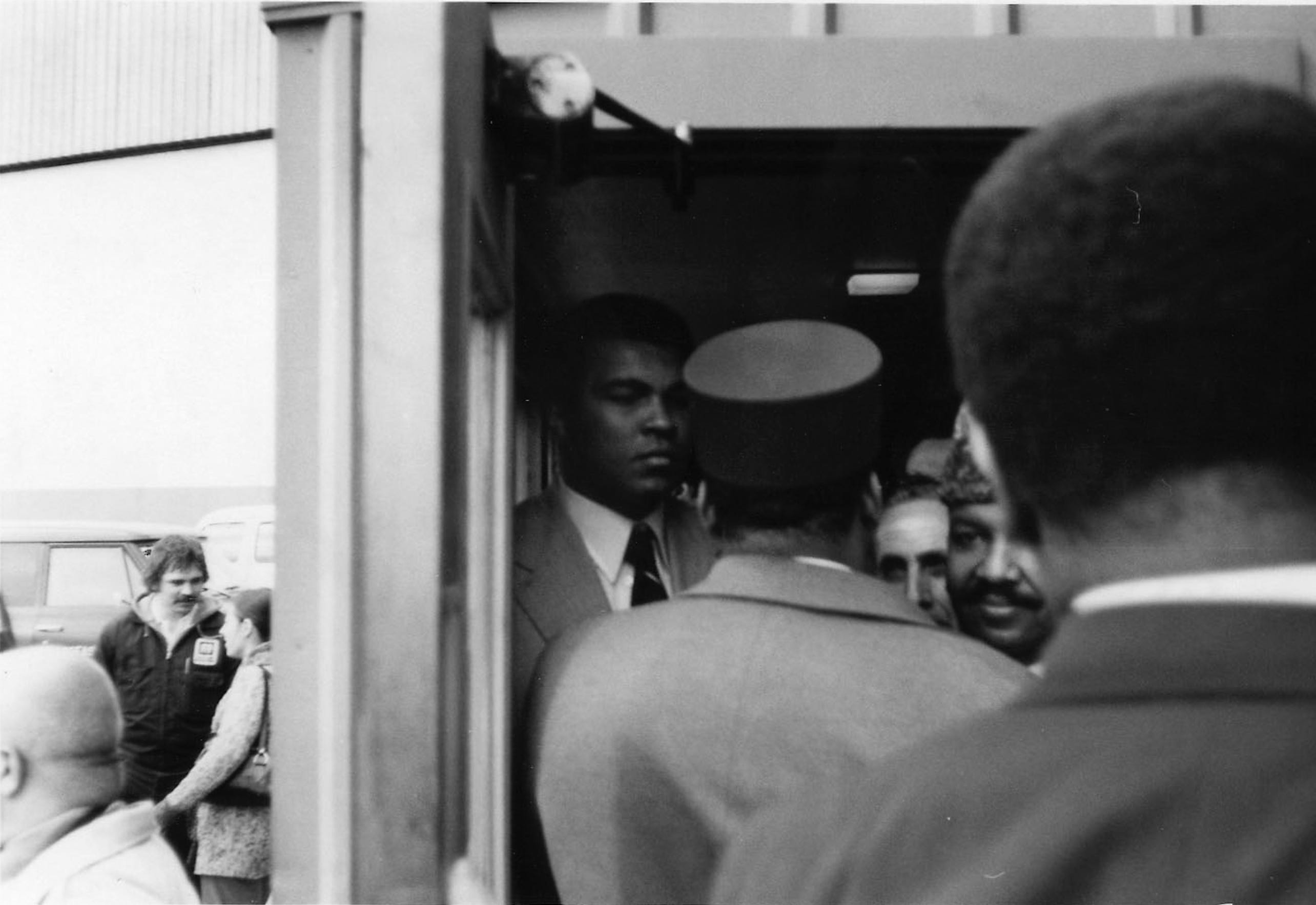
Ali had made a name for himself when he defeated the heavyweight Champion Sonny Liston in February 1964.
After grocery shopping, Ali would ask the store manager to find me to carry his bags out, clearly because I was the only Arab working at the store and one of the few living in the neighborhood.
I would carry the grocery bags to Ali’s car, accompanied by Hassan, and place them in his trunk. Ali would always say, “Shukran” and Salamu-aleikum,” Arab and Islamic greetings of gratitude and respect. And then he would hand me a one-dollar bill as a tip.
Today, one dollar doesn’t sound like much, but in 1968, it was the equivalent of $20 and was significant, close to the $1.25 an hour pay I received working at the major grocery chain.
As I mentioned, the Palestinian community in Chicago, which began settling there in the early 1900s – my father immigrated from Jerusalem, Palestine, to Chicago in 1926 to join his brother Moussa, who arrived in 1920. My Grandfather, Hanna Mousa Hanania, had been one of the merchants selling Holy Land items at the World Columbian Exposition in Chicago in 1893 and returned home telling everyone how the “streets of America” were “paved in gold and opportunity.”
Each year, my mother would fly back to her home in Bethlehem, Palestine, with an empty suitcase she filled on her return with Arabian spices and food ingredients like Molokhia (mloukhieh), Za’atar, Sumac, Cumin, many other spices not easily available in America.
That was the “Silk Road” for American Arabs in the 1950s and 1960s.
One of my mother’s closest friends was Saluka Hassan, Salameh Hassan’s sister.
I met Ali and Hassan again in the mid-1970s after I completed military service in the U.S. Air Force during the Vietnam War.
I had earned the G.I. bill, $480 a month for four years, given to Vietnam-era veterans along with other benefits, to cover the costs of public university for four years.
You could spend it on anything, and in my case, I used the money to cover the costs of publishing an English-language newspaper called “The Middle Eastern Voice” from 1975-1978, the only media that covered the activities of the growing Arab and Muslim community, whose population surged in the years after Israel’s military occupation of the West Bank.
No American printer would publish the 12-page tabloid newspaper, my very first journalism career move, because of the American animosity that existed towards Arabs and Muslims.
The only publishing house to print my newspaper each month was owned by the Nation of Islam and the African American Islamic leader, Elijah Muhammad. I was introduced to Imam Elijah in 1975 by Muhammad Ali at the urging of Salameh Hassan, whose sister had persuaded him to help launch the newspaper.
One of my first interviews was with Ali, who then retired from a successful career as the world’s greatest boxing champion, winning 56 bouts and losing only 5 during his career from 1960 until 1974.
Ali talked about his dedication to spreading Islam throughout the United States and the World, “a religion of peace and justice,” he would say, and how he owed much to the Arab World. Hassan Salameh, who accompanied him during his boxing career, was one of his best friends.
During his boxing career, the Arab community came to a standstill as we listened to the play-by-play on radio, delivered by boxing journalist Howard Cosell. But in his later years, he donated much to help Muslims build Mosques in Chicagoland and even supported Arab and Muslim families who were in need.
Ali traveled to the Middle East many times, and he frequently spoke out in defense of Arabs and Muslims, who were the victims of historic racism in America.
Ali’s dedication to his religion and the Arab community had a huge impact, including building the professional boxing careers of many Arab Americans as promoters, including Murad Muhammad, Kawthar Halbi in the UAE, and Chicago’s own Wasfi Tolaymat, a Palestinian businessman and boxing manager of Chicago Fight Club Promotions LLC.
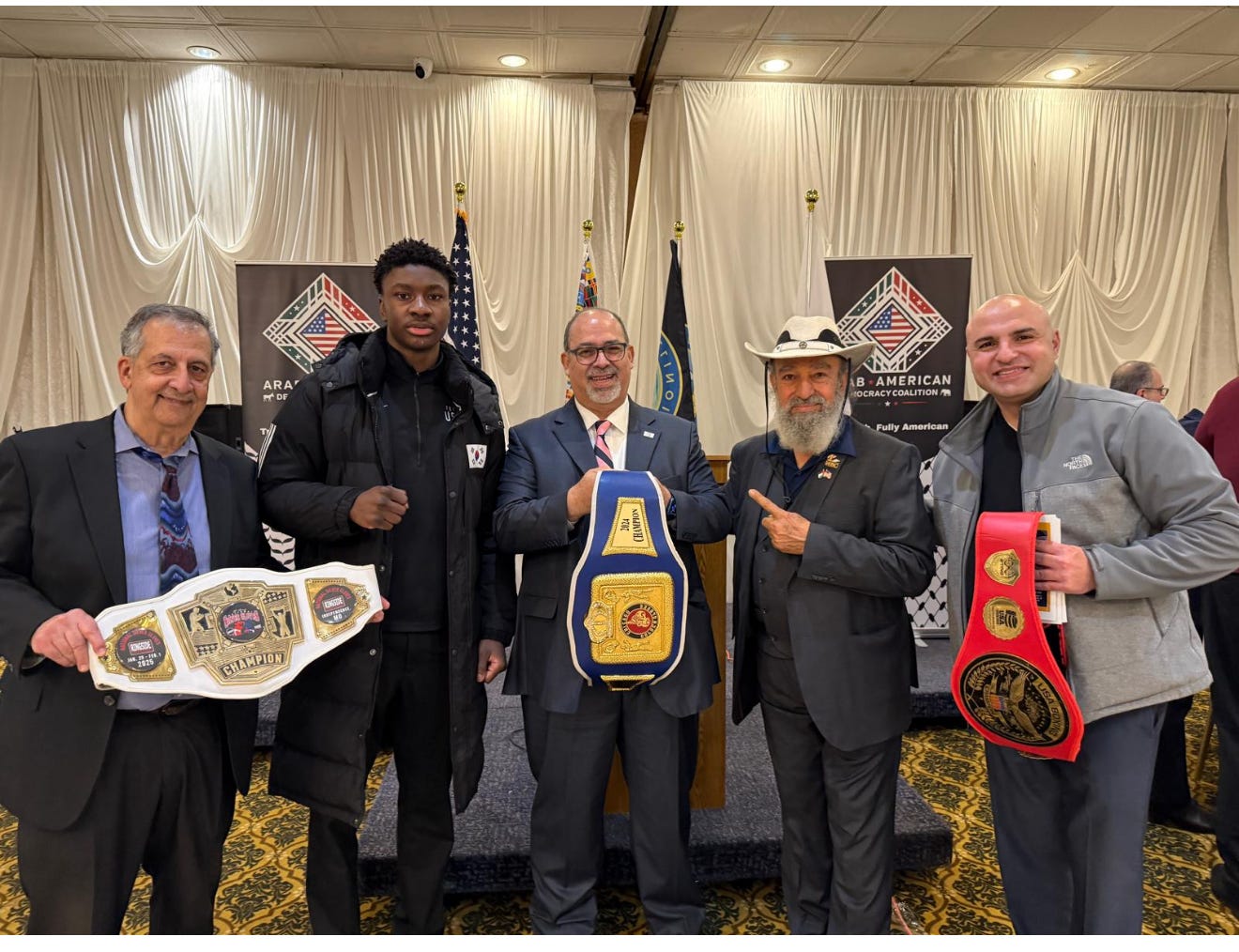
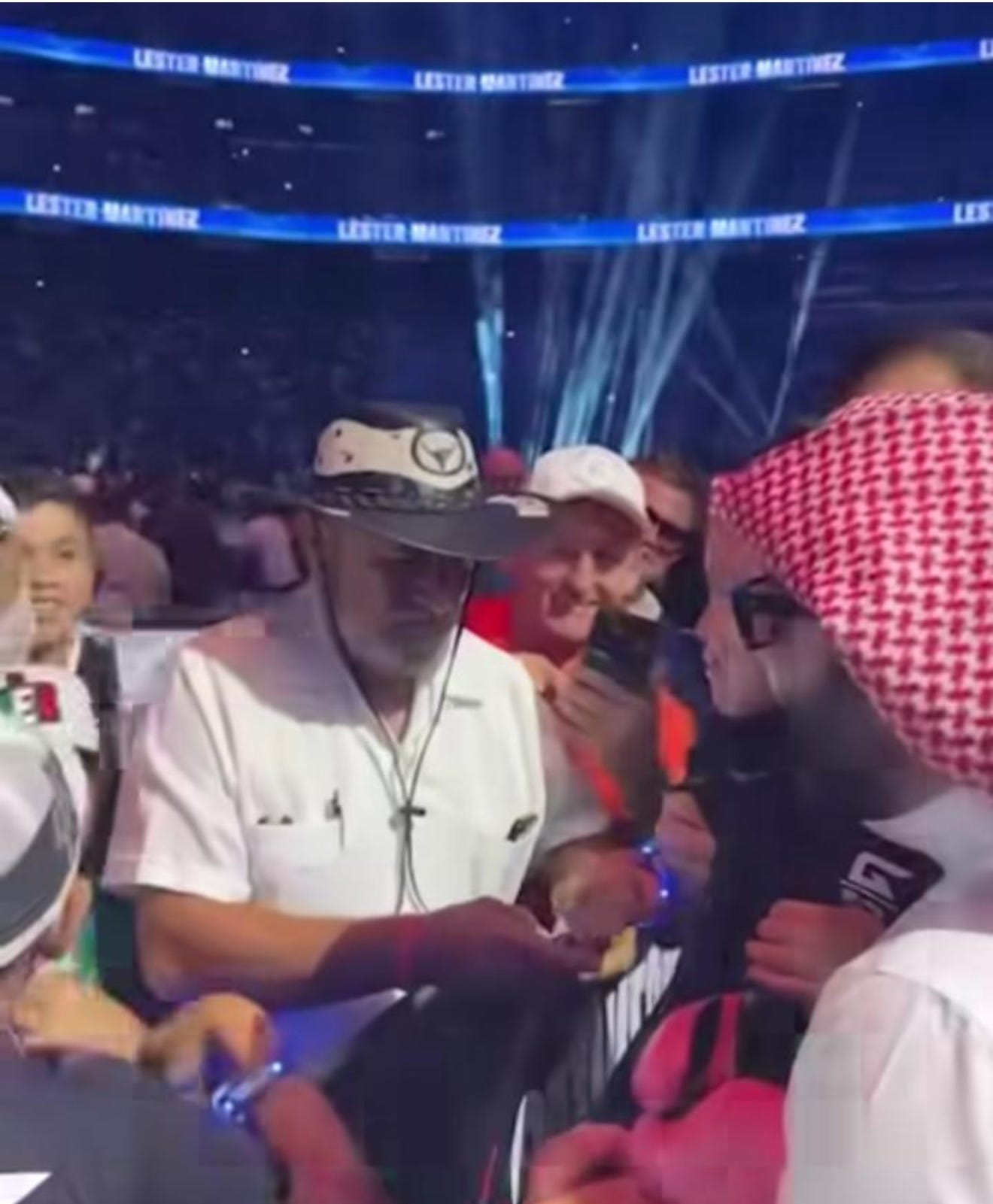
Ali put the spotlight on Boxing with his talent and creative rhetoric, but it slowed down towards the end of the 20th Century.
Reviving that boxing enthusiasm worldwide is Saudi Turki Alalshikh, of Riyadh Season. Alalshikh also serves as Chairman of the General Sports Authority and Chairman of the General Entertainment Authority (GEA), which is promoting the Canelo-Crawford bout.
A global boxing force, Alalshikh and Saudi Arabia have hosted many boxing events which have included Tyson Fury’s heavyweight showdown with Oleksandr Usyk, and Riyadh’s “Day of Reckoning” in 2023.
Alalshikh is the genius behind the worldwide blockbuster championship bout taking place this week in Las Vegas between Super Middleweight Champion Saul “Canelo” Alvarez and Terence “Bud” Crawford.
The Arab role in American boxing is a history worth homage.